Skip to content

Table of Contents
Most people notice it in a photo before they notice it in the mirror. The part looks a little wider than it used to. Here is the reassuring part. Hair thinning with age is one of the most common changes the human body goes through, and it has a clear biological explanation. At Create Medical Aesthetics, we help you understand what’s happening inside the follicle so you can make informed decisions.
Can anything be done about age-related thinning?
Often, yes. Age-related thinning has more than one driver, including follicle miniaturization, shorter growth cycles, hormonal changes, and nutritional or medical factors, so the first step is finding out what is actually happening. A provider can review your history, examine the scalp, and order labs when needed before suggesting an approach.
What “Thinning” Actually Means
Hair thinning describes two separate changes that people often group under one word. The first is a change in how thick each strand is. The second is a change in how many strands are growing. Plenty of people experience some of both, but they come from different places, and separating them helps you understand what you are actually looking at.
Density is what most people notice first, because it is visible. A part that keeps getting wider. A ponytail that needs an extra loop of the elastic. More scalp showing under bright bathroom lighting than you remember.Strand thickness is harder to see and easier to feel. Hair that will not hold a style the way it once did. Brittle hair with age that snaps mid-length when you brush or breaks instead of shedding. Thinning starts when that replacement process delivers a little less than it used to.
How The Hair Growth Cycle Changes Over Time
Every follicle on your scalp runs its own independent cycle with three phases. Anagen is the active growth phase. Catagen is a brief transition. Telogen is a resting phase before the strand is finally released. Because each follicle keeps its own private schedule, you are never growing or shedding all of your hair at the same time, which is a rather elegant piece of biology when you think about it.
On a younger scalp, that growth phase can run two years or longer. That long window is why hair reaches full length and thickness before it is ever shed. With age, the window narrows. The growth phase gets shorter, the resting phase stretches longer, and strands are released before they reach the length and caliber they once did.
At the same time, the stem cell activity that restarts each new cycle becomes less consistent, so fewer follicles wake up on schedule. Nothing has broken here. The cycle has simply slowed down, and that slowdown sits at the center of scalp aging.
Why Individual Strands Get Finer: Follicle Miniaturization
Miniaturization is the single biggest driver behind age-related hair loss, and the word describes the process accurately. With each passing cycle, the follicle itself becomes physically smaller. A smaller follicle can produce only a narrower shaft, so each new strand arrives slightly finer than the last.
Over enough cycles, thick pigmented hairs are gradually replaced by short, fine, lightly pigmented ones. The follicle has not disappeared. It is still there, still cycling, just producing something much closer to peach fuzz than to the hair you remember having.
This is also why it feels so gradual. Miniaturization happens strand by strand across years rather than all at once. That slow pace is why most people register it as “my hair just looks different lately” long before anything resembling a bare patch shows up. If you have been second-guessing whether you are imagining it, you probably are not.
How Hormones Shift The Picture For Women And Men
Hair follicles are hormone-sensitive tissue, so when hormones shift, follicle behavior shifts right along with them. This is why age-related thinning rarely looks the same from one person to the next.
For women, the years around perimenopause and menopause bring a decline in estrogen alongside a relative increase in androgens. That combination can reduce both density and strand thickness, and it often appears as diffuse thinning across the crown while the front hairline stays largely intact.
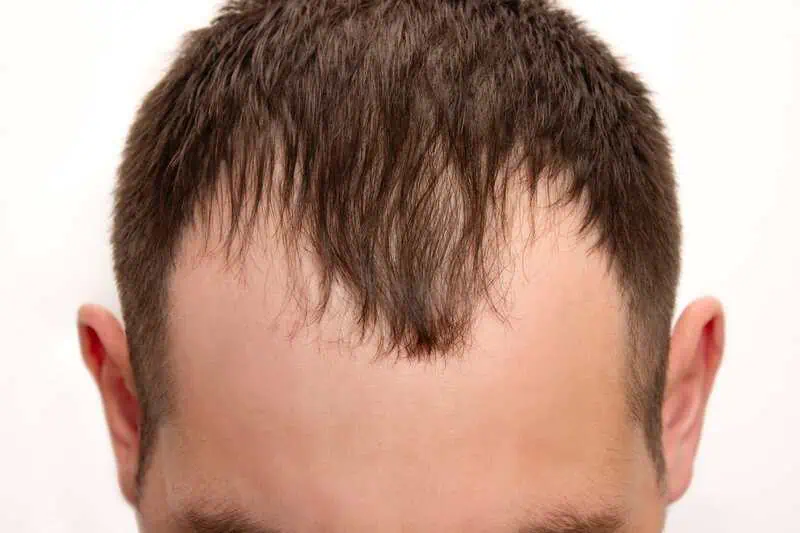
In men, sensitivity to dihydrotestosterone, a byproduct of testosterone, drives miniaturization in a recognizable pattern at the temples and the crown. That is why male thinning tends to follow a fairly predictable map rather than spreading evenly across the scalp.
When Thinning Is Not Just Age
Age is a common explanation, but it is not the only one, and it is worth ruling a few things out before settling on it.
Thyroid conditions, iron deficiency, and certain medications can cause thinning at any age. Telogen effluvium, a temporary shedding phase, typically shows up 2 to 3 months after illness, surgery, childbirth, or a period of real stress, and it often resolves on its own once the trigger has passed.
A few signs point toward a medical evaluation rather than a cosmetic one:
- Sudden or heavy shedding instead of gradual change
- Patchy loss, or loss in a defined circular area
- Scalp irritation, burning, redness, or tenderness
- Thinning alongside fatigue, weight changes, or other new symptoms
Identifying the cause genuinely matters, because the right path forward looks different depending on what is driving it.
What Knoxville Patients Can Do About Age-Related Thinning
Approaches for age-related thinning generally work by supporting follicles that are still active rather than reviving ones that have gone fully dormant. That is why an earlier evaluation often leaves more to work with, and why scalp health deserves attention before the change becomes obvious to everyone around you.
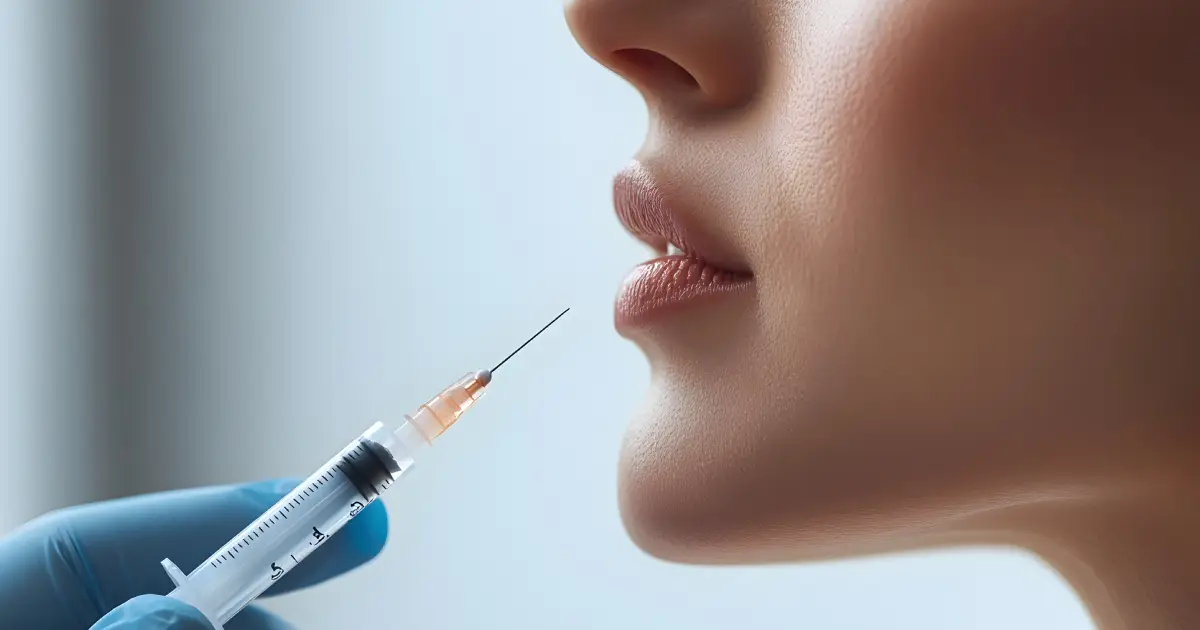
Platelet-rich plasma is one option some patients choose to explore. PRP uses a small sample of your blood, spun in a centrifuge to concentrate the platelets, then injected into thinning areas of the hairline, crown, or temples to support follicle activity. At Create Medical Aesthetics, hair thinning treatment sessions with our provider take roughly 30 to 45 minutes after the scalp is numbed, and most patients return to normal activity the same day.
Ready for a Clearer Answer?
At Create Medical Aesthetics, Hair Regrowth Treatment in Knoxville, TN, includes a scalp exam, a review of what may be driving your hair thinning, and help weighing realistic options together. Understand What’s Behind Your Hair Thinning Today!